Leave space around the music.
A meal or reception has its own rhythm: arrivals, conversation, service and shared attention. A programme should find a place within that rhythm.
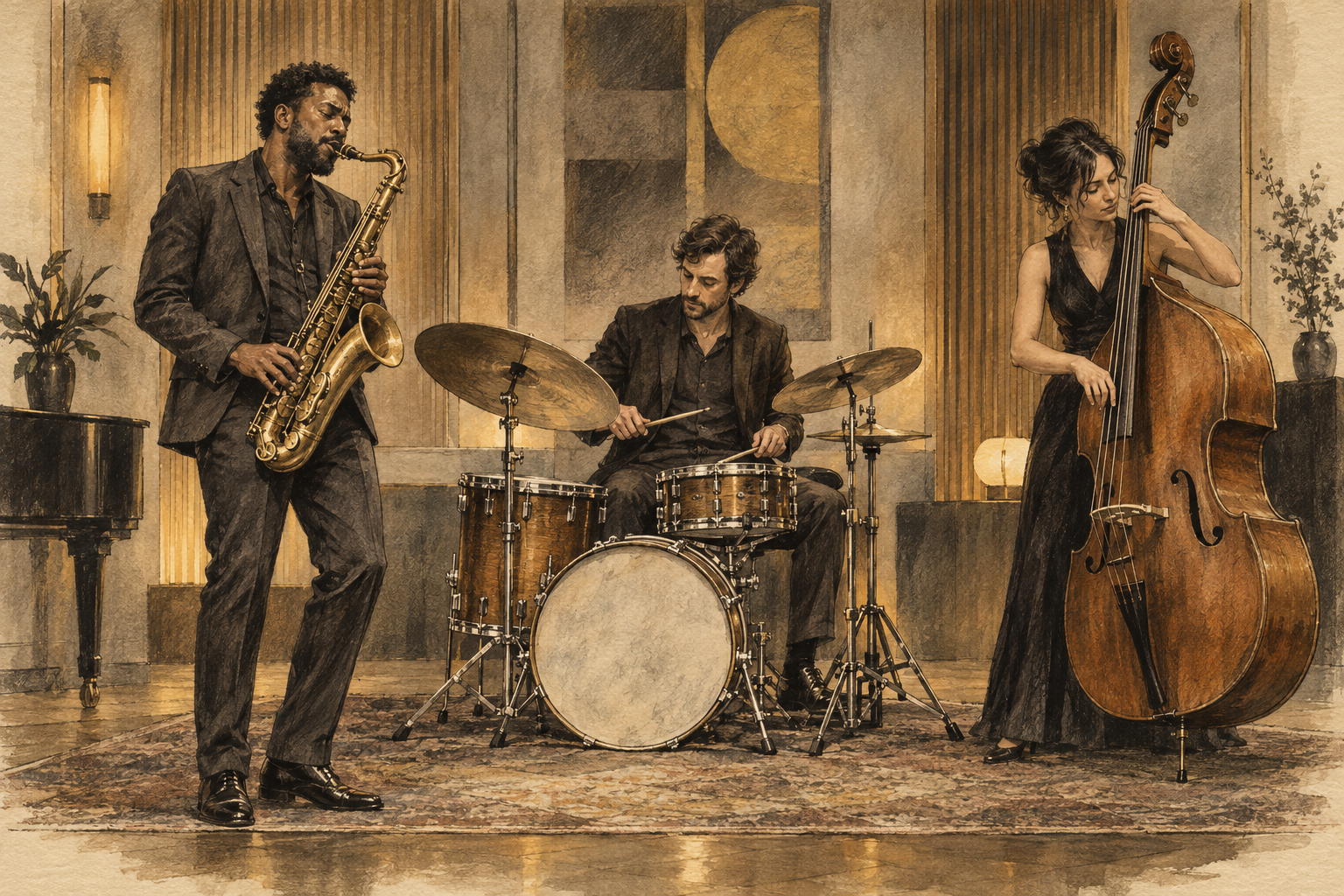
A programme,
in your order.
The running order
Use Move earlier or Move later. Remove a moment, or add it again below.
- 01
Arrival & welcome
Music alongside greetings and the room settling.
- 02
A moment to listen
A focal performance with space for shared attention.
- 03
A departure
A closing transition and a clear final cue.
The Second SetSample programme
Duo direction
- Arrival & welcome
- A moment to listen
- A departure
Musical intentions for discussion.
Pieces, duration and performers to be agreed.
A planning study. No set list, rights, performer or date is confirmed.
The gathering’s shape
- Arrival
- Explain whether guests are entering one room or moving between spaces. Ask how the supported format fits that setting.
- Conversation
- Describe the role of music alongside talking. The actual sound arrangement must be agreed for the room.
- Service
- Discuss where musicians and venue activity share space. Timing and practical needs should be reviewed together.
- Focal moments
- Speeches or a dedicated performance may ask for a change in attention. Agree who cues the transition and what happens afterwards.