Meridian / Travel / Notebook

Useful notes stay close to the ground.

A field notebook for reading a route description. These are editorial planning observations, not a report from a journey operated or walked by a real provider.
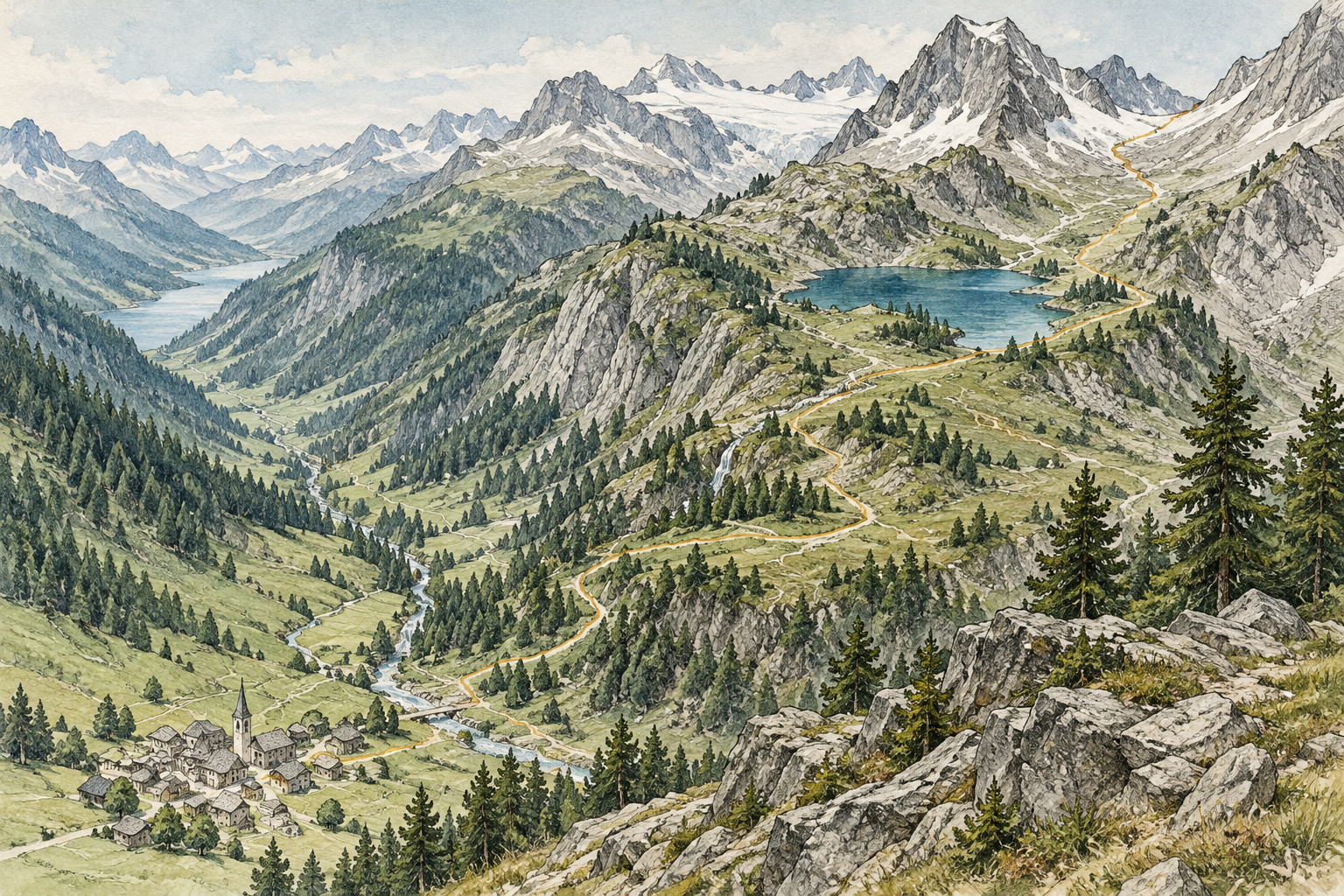
Printmaking study of a lake route through mountains; not a navigation map
The Lake Passage / Concept terrain

A photograph cannot describe the whole day

A wide view can show the character of a landscape while leaving the practical route out of frame. The path may involve surfaces, crossings or changes that the image does not reveal.

Treat the photograph as atmosphere until the actual provider connects it to the right route and explains what the day involves. Keep the questions about distance, ground and support beside the view.

A pause is part of the plan

The time between moving can matter as much as the pace itself. Ask where the day allows a rest, what facilities are available and how the organiser responds when the group needs a different rhythm.

An itinerary should not need every assumption to go perfectly in order to work. Real transfers, start times and return arrangements deserve space in the same record as the main activity.

An alternative needs its own detail

A shorter or different stage is useful only when the organiser can explain it. Ask what triggers a change, who decides, what support remains and how the group reaches the next point.

The Lake Passage study leaves those details unconfirmed. It provides a place for the questions, with no claim about current weather, conditions or route safety.

Take the notebook into the route file.

Read the sample stages with the practical unknowns in view.

Open the route detail