Room for the real recording.

The visual sleeves describe concept moods. No audio files or tracklists have been supplied, so this preview has no playback control pretending to be connected.

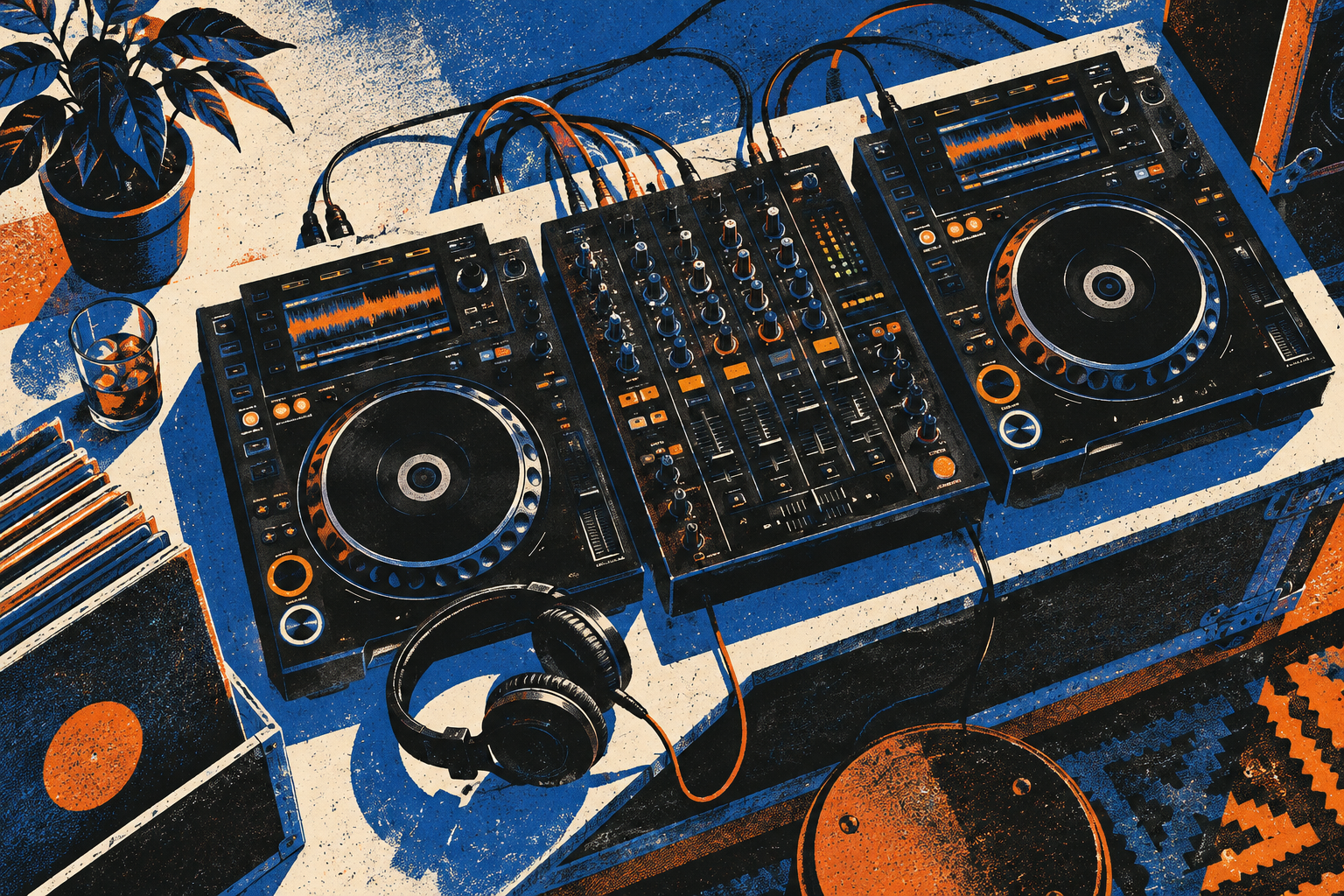
Original cobalt and orange print illustration of decks and a mixer
Original concept artwork. No recording or performance is implied.

What a useful recording would show.

A future audio reference could introduce the performer’s selection, pacing and transitions. Its description should say what kind of set it is, how it relates to the event brief and whether it is a live or studio recording.

An excerpt should not be presented as proof of a particular past event without the right context and permission. Artwork can identify a mood without claiming that a released record exists.
Can I hear these three moods now?

Not in this design preview. The current page uses written mood descriptions and original artwork. Actual recordings need to be supplied before playback can be added honestly.

Can I bring my own references?

Yes. Describe what you like about a reference and which part of the gathering it belongs to. The performer can then discuss an appropriate direction.

Will a reference become the final tracklist?

That needs agreement with the performer. A reference is useful context, but it does not establish the final sequence or any music rights arrangement.

Begin with the feeling.

Until audio is supplied, the listening desk is a useful place to compare the written studies and collect an event direction.

Return to the listening desk