A working page for your property.

Use ordinary descriptions and approximate counts where that is all you know. This sheet prepares a conversation; the actual provider reviews the scope, method and terms.
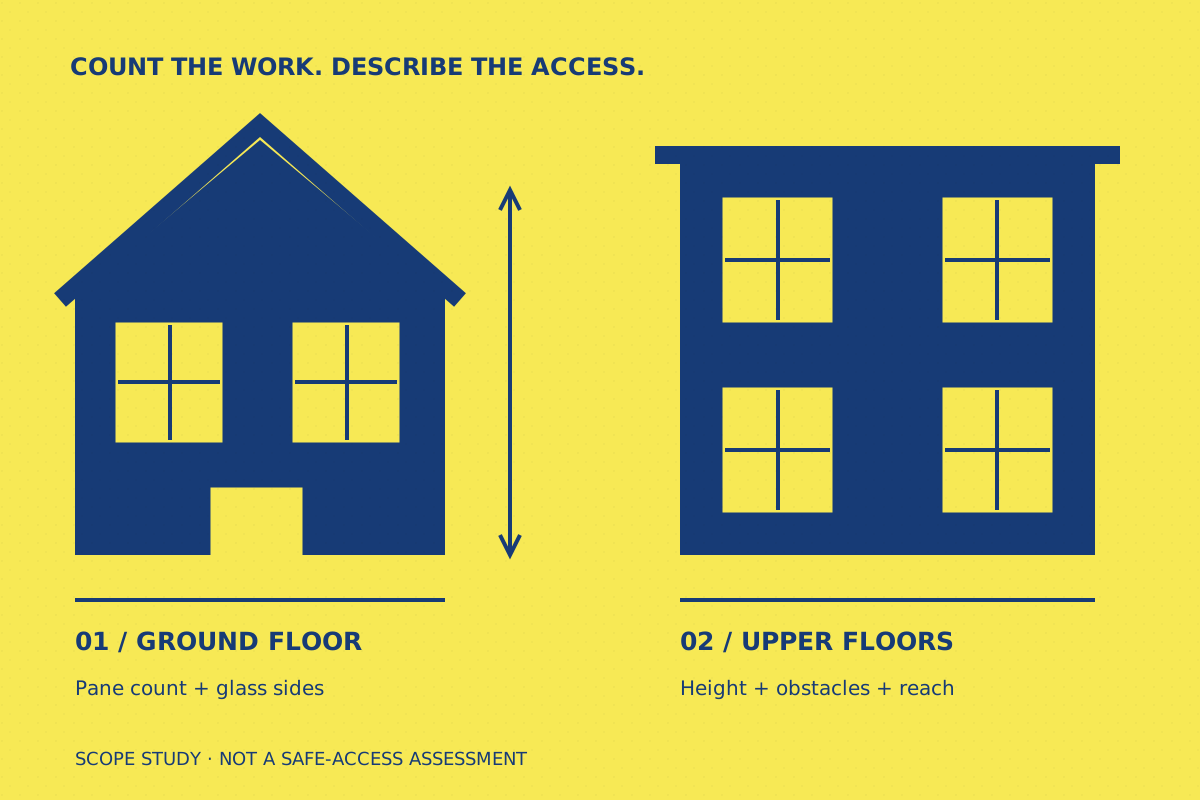
Concept illustration of the subject, not a client project
Concept scope drawing. Counts and access must be checked for the actual property.

Example to try. Edit a choice to make it your starting point.

Your sample scope

Sample house / A1, A2, A3, A4, B1, B2, B3, B4 / Exterior / 8 panes, 8 glass faces. Routes, materials and actual scope remain to review.

Sample selections from the study. Questions remain open for the real provider.

Edit the study

Before filling the boxes

Count consistently

Choose one way to group the glazing, such as a room or elevation. Note whether your number is panes, opening sections or whole window units.

The tally page helps explain the difference between a pane and a face.

Describe the surroundings

Mention interior furnishings, frames and adjoining finishes. Include ordinary exterior routes and visible obstacles as context.

Do not climb or move equipment to gather information.

Write down uncertainty

Unknown coatings, unclear construction and access questions should stay visible.

The worksheet is useful because it shows what remains to be reviewed.

Your scope draft

No property details are sent. Use broad sample notes and save only what you want to keep.

Study selections: Example to try: Sample house / A1, A2, A3, A4, B1, B2, B3, B4 / Exterior / 8 panes, 8 glass faces. Routes, materials and actual scope remain to review.

Your draft appears here. Nothing is sent or booked. Avoid confidential or sensitive details.

Need a clearer counting method?

The pane and face tally makes the terms easier to keep apart.

Open the tally