Three glazing groups. Three different questions.
These are concept records for reading the scope. They do not describe an actual customer property or an agreed care method.
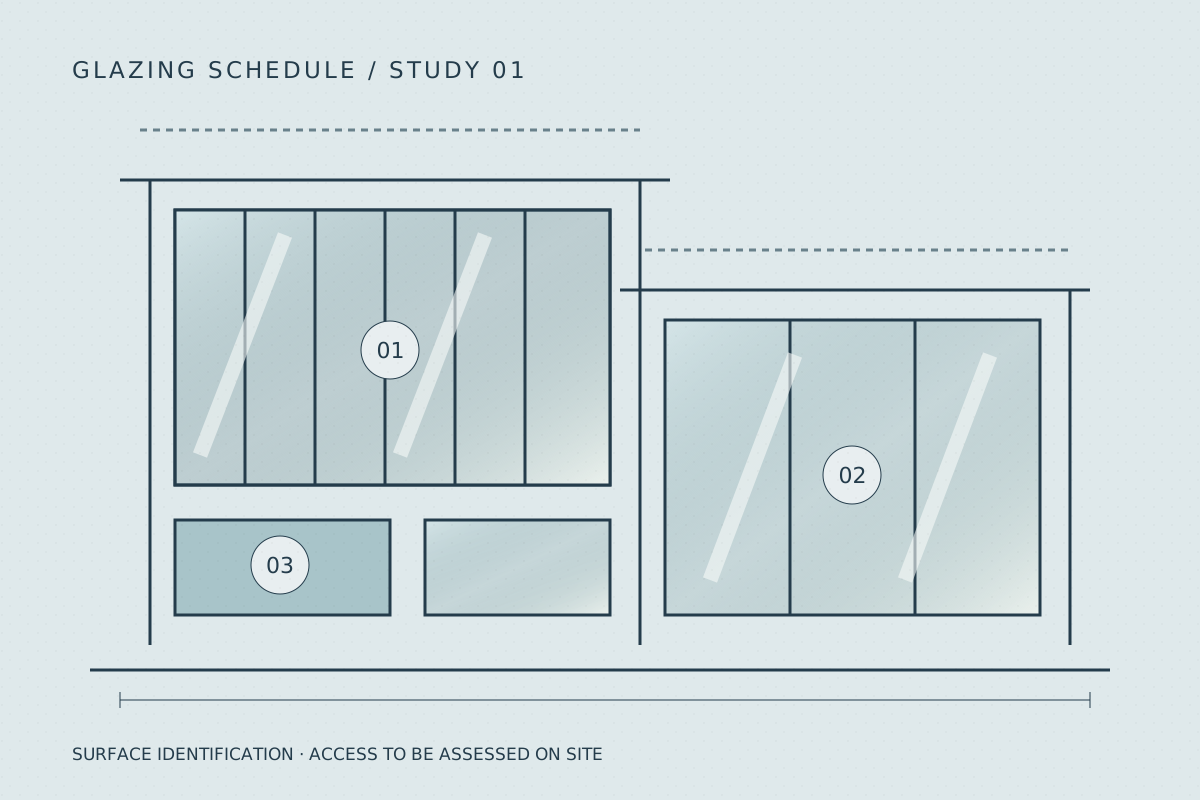
One elevation.
Three conversations.
Tall fixed glass
Questions for this surface- What is beneath the tallest glass?
- Are the frame finish and glass coating known?
- Which ordinary route can the provider review?
A window-care study. Surface selection is a description, not an access assessment.
A / Tall fixed glazing
- Faces
- State whether the discussion covers the room side, outside face or both. Record each as a distinct part of the scope.
- Edges
- Describe visible frame and sill materials. Ask how adjacent surfaces and any known coatings affect the work.
- Questions
- What can be reviewed from the available route? What information does the provider need before confirming the scope?
B / Doors & sliding panels
- Faces
- Record the panels and the sides to discuss. Explain whether the door is part of the normal route through the space.
- Edges
- Ask whether visible tracks, frames and meeting edges are included. Cleaning and mechanical maintenance are separate discussions.
- Questions
- Who will provide access? Are there product instructions or known restrictions the provider should review?
C / Lower opening windows
- Faces
- Describe the group and which faces need discussion. Do not assume an opening window provides safe exterior access.
- Edges
- Mention the surrounding sill, blinds and furniture. Note any area you know is fragile or restricted.
- Questions
- Which parts are within the proposed scope? What remains subject to the provider’s inspection?