People. Instruments. Chemistry.

The design has a place for an actual collective. Its real musicians, supported line-ups and credits must be supplied by the act.
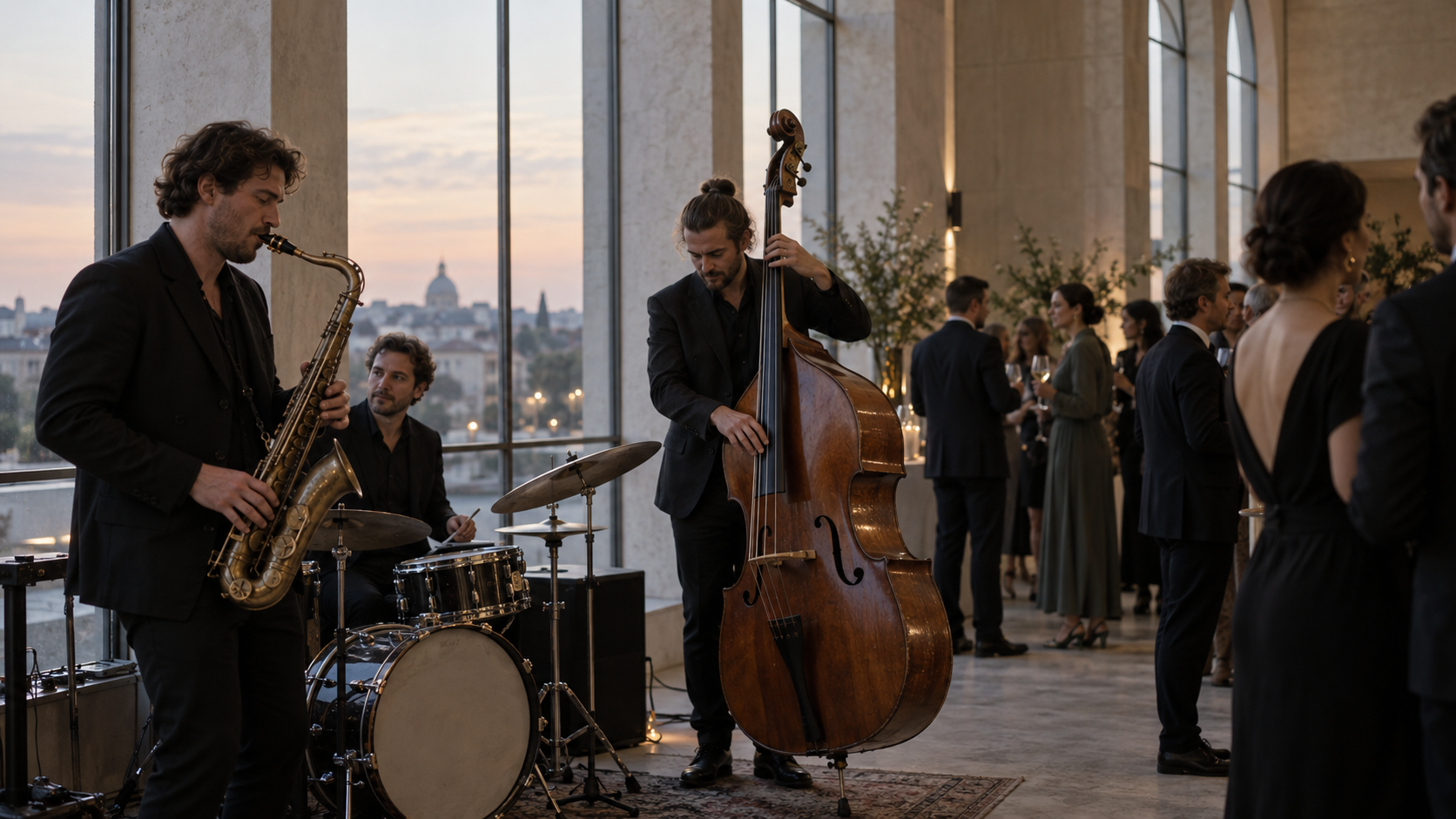
Reference ensemble with saxophone, drums and double bass
Reference ensemble / identities and supported formats not supplied

What the introduction should tell you

Who is performing

Approved names, roles and instruments should sit together so an organiser can see who is being discussed.

No named musician, experience claim or performance history has been invented here.

How the line-up works

Ask which formats the actual act supports and whether the people pictured match the proposed event.

A sample band image does not establish a permanent ensemble or guarantee an instrument.

How to hear the act

Ask for permitted examples labelled with line-up, setting and whether the sound is live or studio.

No approved audio has been supplied to this concept.

The work before the room comes alive

A real ensemble can explain how it prepares arrangements, handles requests and coordinates the event. The organiser brings the running order; the venue brings its practical conditions.

The useful first conversation connects those three views. It should result in clear questions and an agreed next action, rather than assumptions from a photograph.

Give the actual musicians the context.

The event brief makes room for the occasion and the questions you need answered.

Prepare an event note