A good day,
from door to door.

Find the care that fits
their familiar rhythm.

Three ways to read a walk.

These are sample care scenarios, not offered routes or prescribed routines. Use the one that feels closest to your dog as a starting point for the provider’s assessment.

The curious pause.

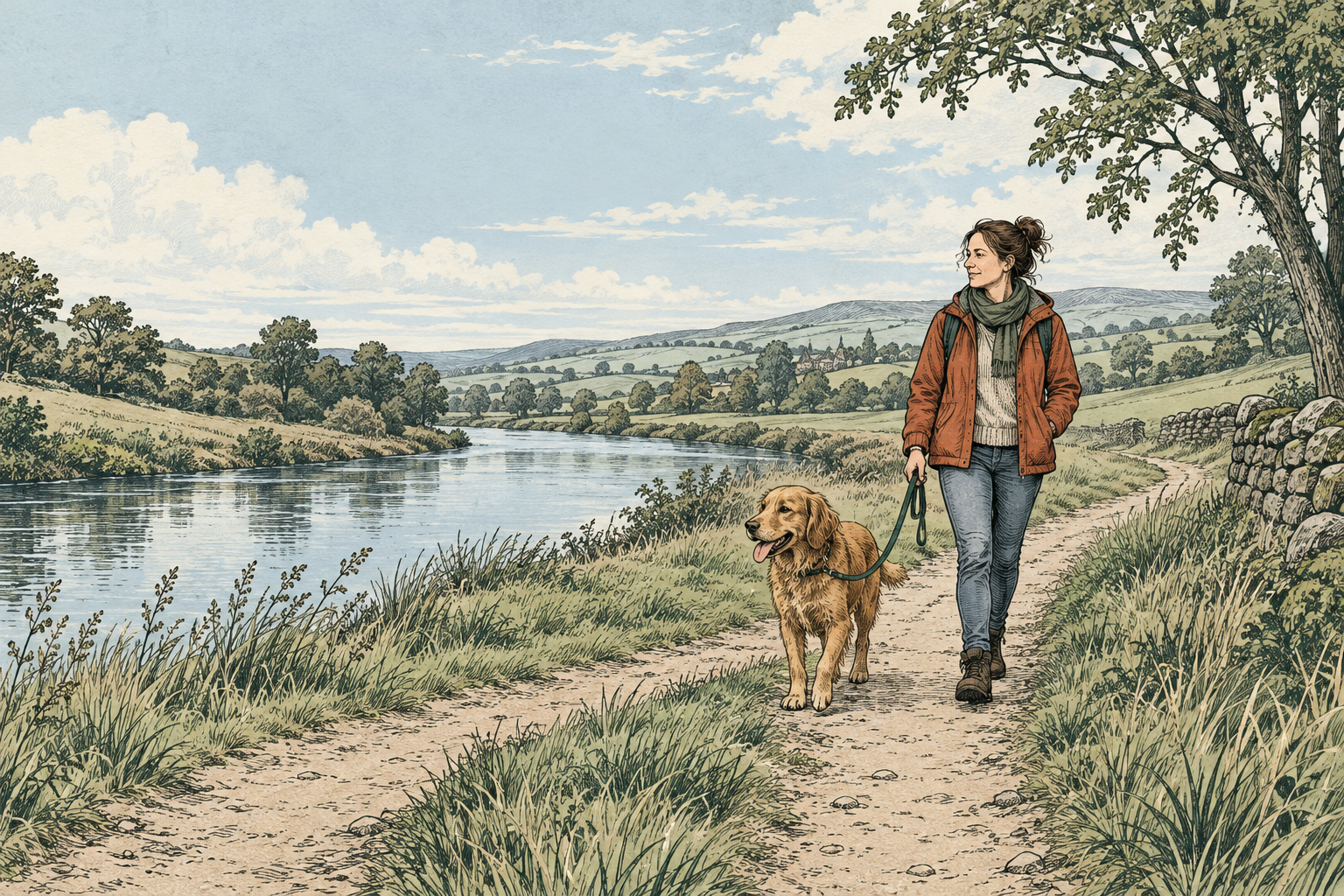
Hand-inked field-guide scene of a dog and carer following a path beside a river
An illustrative route, not a named local walk or service-area claim.

A dog likes to investigate the small changes along a familiar path. The owner wants the walk to leave room for that attention rather than making distance the main goal.

What to tell the carer
Where the dog tends to pause and how they respond when it is time to move on.
What to discuss
Pace, handling and how the provider balances exploring with the agreed routine.
Homecoming note
What the dog usually does after a walk and the update you would like to receive.

The quieter loop.

A dog is more at ease in familiar surroundings and the owner wants to discuss a less busy outing. The useful note describes actual responses and known triggers, rather than assuming one route suits every day.

What to tell the carer
Responses to traffic, other animals, people and unfamiliar changes.
What to discuss
How the provider selects and adjusts the outing for this dog.
Homecoming note
Anything the owner wants observed or reported on return.

The steady stretch.

A dog enjoys moving with a familiar rhythm, while still needing the individual pace and setup agreed. The owner’s note describes what an ordinary outing looks like and how changes are noticed.

What to tell the carer
Usual pace, familiar cues and relevant observations about the dog’s day.
What to discuss
The actual service, equipment and any limitations the provider identifies.
Homecoming note
The return routine and how updates are shared.

Write your dog’s version.

A few specific observations are more useful than choosing a label.

Make a walk introduction note