A Bowl Left in the Sun
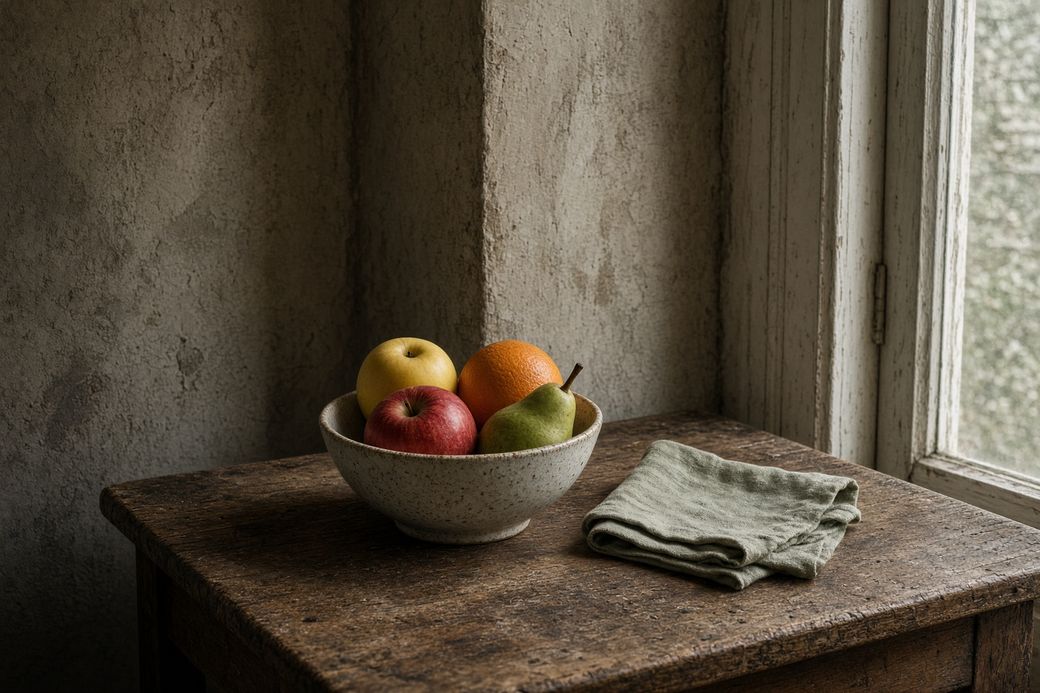
On a scarred kitchen table, fruit and a folded cloth arrange a kind of order that nobody had to announce.
The corner that keeps the light
The table came with the house and has the scars to prove a previous century of elbows. I put the bowl where the afternoon finds it, not because the fruit improves, but because the light does something honest to a pear. The cloth beside it is sage, and folded badly, which is the only way it ever stays folded.
There is a burn mark near the edge from a pan I should not have set down. I used to plan to sand it out. The plan has become part of the table, the way a good intention becomes a story you tell instead of a task you do.
A quieter order
Nothing on the table is arranged for a guest. The orange has a soft spot. The apple nearest the window is the one I keep meaning to eat. Still, from the doorway, the bowl and the cloth look as if a decision has been made. This is the order I trust: the kind that happens because an object was put down and then left alone.
A kitchen can be tidy without being finished. Finished is a different, less interesting room.
After the meal
When the plates are done, I do not clear the bowl. It holds the evening in place while the rest of the room goes back to being a room. In the morning the light is thinner and the cloth has slumped, which feels correct. I refold it once, badly, and leave the burn mark where it is.