The Cut Beside the Allotments
A strip of ground between a railway fence and the bean poles, used by people who have stopped explaining it to anyone with a map.
The gap in the hawthorn
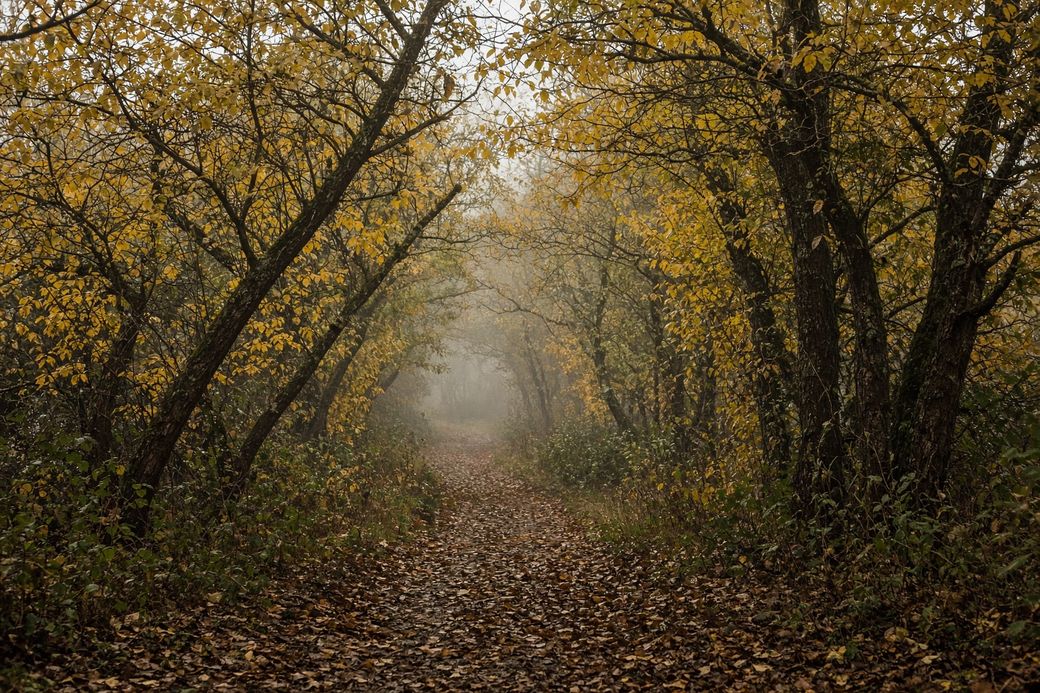
I started using the cut because the road was a trench. A water main, they said, though the barriers stayed up long after the men in high-vis had gone somewhere else. The first afternoon I slipped through a gap in the hawthorn I felt like a trespasser. By the third afternoon the trench was still there and I had stopped apologising to nobody.
The cut is not a footpath in any sense a council would recognise. There is no fingerpost, no compacted gravel, only a darker line in the grass where feet have agreed. Someone has tied a piece of orange twine to a post. It is the only official-looking thing, and it is not official.
What the rain keeps
In September the ground holds the shape of the last rain. Leaves lie in a soft brown carpet that gives under a boot and then slowly forgets it. The trees lean in without making a cathedral of themselves. You can hear the trains if you stop. If you keep walking, the sound thins until it is only a rumour about a timetable.
I do not know who decided this was a way through. That is most of its charm. It has the look of an agreement that was never written down.
Preferring it
A man with a paper bag of pears once nodded at me, which I took as a kind of lease. A collie considered my knees and moved on. Neither of them seemed to need the cut to have a name. When the trench on the road finally closed, I stayed with the hawthorn anyway.
What walking does, once you stop trying to make a lesson of it, is smaller than the essays usually allow. You arrive home a little more like a person who has been somewhere — even if the somewhere is only a strip of ground the map will never bother to keep.