January
January
Quiet luxury: bulbs and evergreen, with very little filler.
The shop’s “in season” filter follows this month’s buckets. January is here so you can plan ahead.
Stems
Colours
- White
- Evergreen
- Cream

The shop’s “in season” tag follows the current month. The calendar below is for planning — a June peony is not hiding in the October buckets.
Library photograph, used as illustration.
January
Quiet luxury: bulbs and evergreen, with very little filler.
The shop’s “in season” filter follows this month’s buckets. January is here so you can plan ahead.
February
The first scented branches arrive. Still cool palettes.
The shop’s “in season” filter follows this month’s buckets. February is here so you can plan ahead.
March
Blossom weeks. We keep daffodils in their own vase — they sour the water for other stems.
The shop’s “in season” filter follows this month’s buckets. March is here so you can plan ahead.
April
Soft and full. Lilac is fragrant and thirsty.
The shop’s “in season” filter follows this month’s buckets. April is here so you can plan ahead.
May
Peony season starts late in the month, weather allowing.
The shop’s “in season” filter follows this month’s buckets. May is here so you can plan ahead.
June
The loudest month. We design looser, with more stem showing.
The shop’s “in season” filter follows this month’s buckets. June is here so you can plan ahead.
July
Heat shortens vase life. We cut early and condition longer.
The shop’s “in season” filter follows this month’s buckets. July is here so you can plan ahead.
August
Holiday weeks. Same-day still runs, with a smaller bucket list.
The shop’s “in season” filter follows this month’s buckets. August is here so you can plan ahead.
September
Our favourite shift: richer colour, longer lasting heads.
The shop’s “in season” filter follows this month’s buckets. September is here so you can plan ahead.
October
The studio is in its autumn uniform. Hearthside is the bunch we keep rebuilding.
The shop’s “in season” filter follows this month’s buckets. October is here so you can plan ahead.
November
More texture, fewer soft petals. Lovely in low light.
The shop’s “in season” filter follows this month’s buckets. November is here so you can plan ahead.
December
We avoid dyed stems. Festive means scent, berry and candlelight, not glitter.
The shop’s “in season” filter follows this month’s buckets. December is here so you can plan ahead.
At the bench now






Care guides
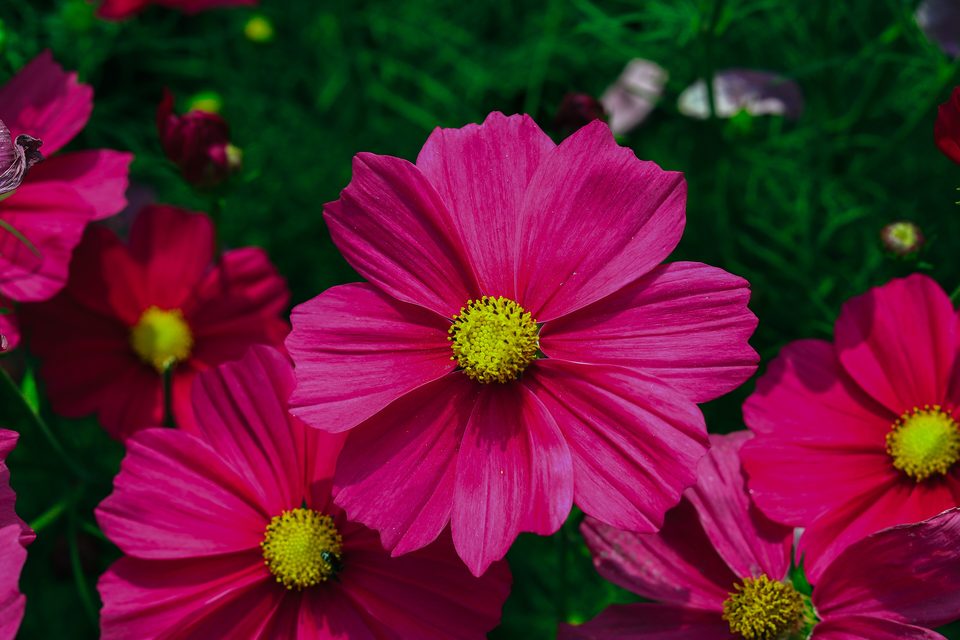
Unwrap it within an hour if you can. If you are out, a cool porch is kinder than a radiator. Snip the tie, take off any lower leaves that would sit in water, and give every stem a fresh diagonal cut.
Use a very clean vessel and cool water. Fill so the stems drink but the flower heads stay dry. Top up daily. Change the water entirely every other day — bacteria, not sadness, is what ends a bunch early.
Away from fruit bowls (ethylene), direct midday sun and the hottest side of a radiator. A cool room at night will buy you days. Dahlias and chrysanthemums are steadier than garden roses; roses reward a daily recut.
Pull any stem that has given up so it does not spoil the others. Recut the rest, rinse the vase, and refill. A pinch of the flower food we include is enough — more is not better.
Lilies (Lilium) are seriously toxic to cats, including the pollen and the water they stand in. We do not use lilies in our everyday bouquets. Many other flowers can upset cats and dogs — tulips, daffodils and chrysanthemums among them. If a pet shares the house, say so when you order and we will steer the design toward gentler foliage and away from the riskier stems. This is a guide, not veterinary advice.