In the press room ·
How three inks become five colours
We do not mix a green. Blue and sunflower sit on the same patch of paper and the green arrives by itself.
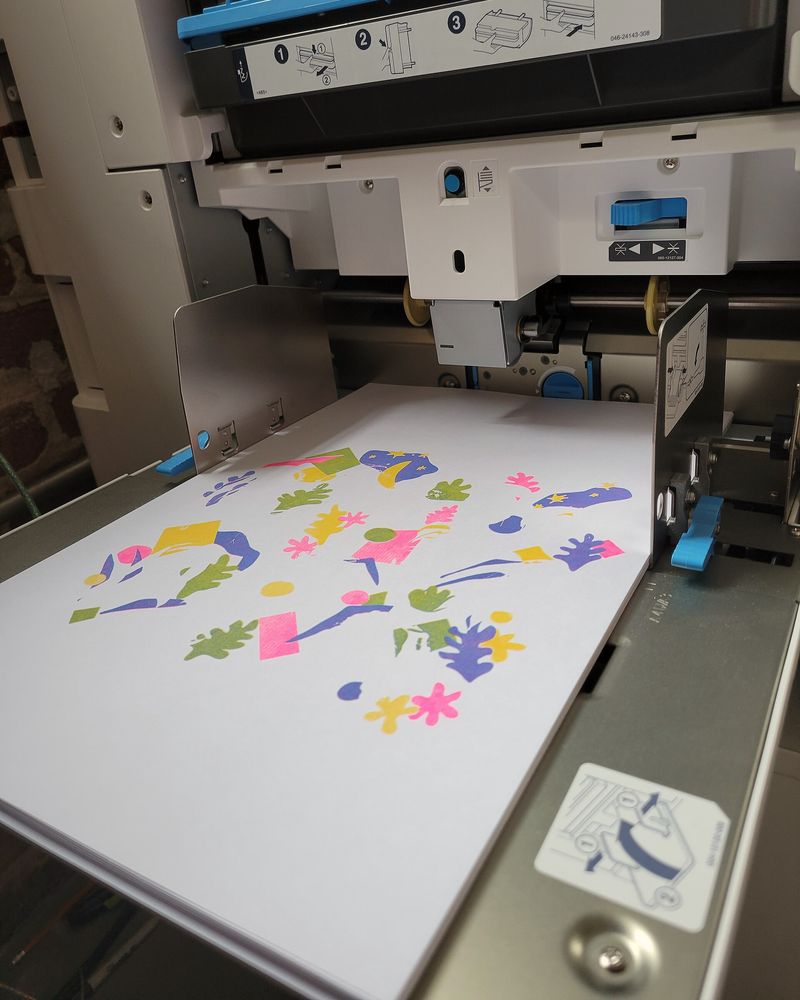
A risograph page is not a painting. Each ink is a separate pass, a stencil on a drum, a colour that only knows how to be itself. If you want green you can buy a green drum. Often we do not. We print riso blue, then sunflower, and the overlap goes olive, moss or something like bottle glass depending on the paper.
That is the whole trick, and it is worth saying plainly because screens hide it. On a monitor, multiply is a blend mode. On the press it is physical: the second ink is translucent, the first ink is already dry enough to take it, and the paper shows through both. Fluoro pink over blue is not a colour we can name from a fan deck until we pull the sheet.
When you are separating a file, draw the overlaps on purpose. A circle of pink that misses a circle of blue by a few millimetres gives you three colours and a little fringe. That fringe is not a mistake we apologise for. It is the plate telling you it is a plate.
Start with two inks. Add a third only when the sheet still looks hungry. Four inks is a long afternoon and a higher quote, and it is wonderful when the picture needs it. Most of the editions downstairs needed three.
Other notes open with JavaScript; their introductions are on the journal page.