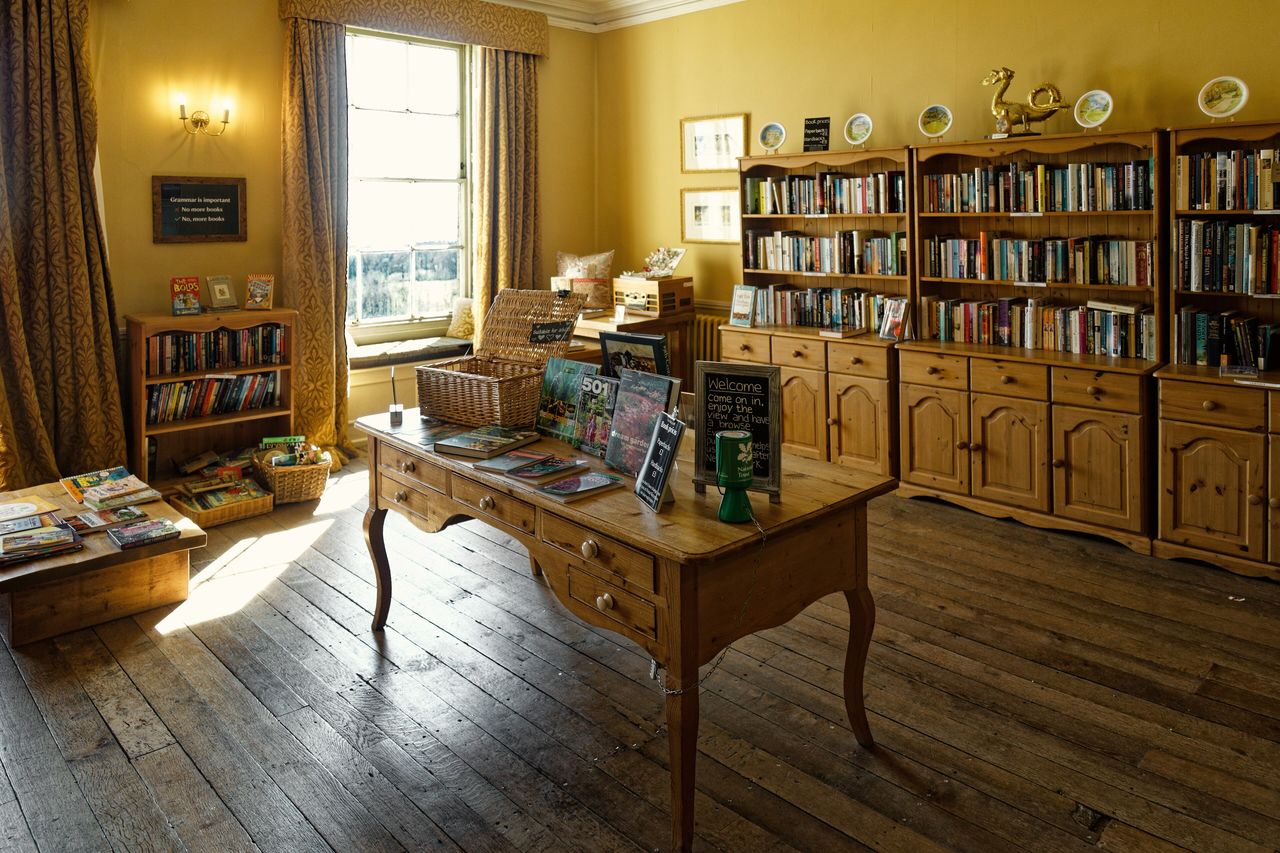
The street is still deciding what kind of morning it will be. A bus sighs at the stop and does not open its doors. In the window of the library the lights are already on, which makes the glass look thinner, as if the building had been left slightly ajar. I do not have a special key. I am only early, and the person who is paid to be early is earlier than I am. She lets me in with the nod of someone who has agreed, without a meeting, that we will not make a conversation of it.#
A room that has been warm all night
There is a smell that libraries keep for the hour before readers arrive. It is not the smell of books, which is too often described and too seldom accurate.1 (footnote 1) It is the smell of a room that has been warm all night while the street was not. Radiators tick. A trolley of returns waits like a queue of other people’s evenings. Someone has left a green scarf on the back of a chair, and the scarf has adopted the posture of a person who means to come back.#
I put my bag at the end of the long table nearest the atlas stand, and I do not yet take out my work. This is the part I come for, and it is easy to miss if you begin too quickly. The room is doing nothing. Doing nothing, in a public building, is a luxury we rarely admit to wanting. You can hear the heating, and a page that has not been turned, and the soft sounds from the desk: a date stamp, a drawer, the little plastic cough of a barcode that has failed and been tried again.#
I used to think of libraries as places of extraction: you arrived, you located, you left with something you had not owned. The early hour suggests another account. A library also stores ordinary time. Not only the dramatic time of archives, sleeping in spines, but the time of a Tuesday, and of someone who needs a warm chair without having to explain the need at the door.#
The verbs a library keeps
The woman at the desk — I have never asked her name, and the not-asking has become its own courtesy — wheels the trolley towards Fiction and pauses by the low shelf of large-print romances. She straightens one volume by a finger’s width. It is the smallest repair I will see today, and I am fond of it. We talk about cities as if the only verbs were build and demolish. A library’s verbs are quieter: shelve, renew, reserve, forgive a fine, turn a book the right way up.2 (footnote 2) None of these will be famous. All of them keep a room possible.#
You cannot be late for a door that is still a door and not yet an entrance.
When I finally open my notebook I write the date, then a sentence I will probably cross out. It does not matter. The point of the first sentence, before opening, is not to be good. It is to join the room in its slight activity. Outside, a man in a bright jacket looks in, cups his hands to the glass, and decides against whatever he was considering. The library is not yet officially for him. I feel, briefly, the odd guilt of the early. Then I remember that he can come at nine, and that nine is a promise the building intends to keep.#
There is a poster by the stairs for a reading group. It is slightly crooked, and I leave it. I am the person who arrives before the straightening, which is closer to listening than to caretaking. Still, care leaks in. The chair with the scarf has a wobble. The atlas is open at an ocean, as if the last reader had planned a departure and thought better of it.#
Three minutes to nine
People will say that the library is a refuge and a radical idea hiding in plain sight. I do not disagree. I only want to add the unfashionable detail: it is also a room with a clock, and the clock is a little fast, and nobody has corrected it because nobody is late yet. In the hour before the library opens, lateness does not exist.3 (footnote 3)#
At three minutes to nine she puts the stamp back in its tray. She looks towards the entrance with an expression I have come to think of as professional hope. Not cheerfulness. Hope as a form of attention. She aligns a pen with the edge of the counter and rests her hands where the day’s first question will land. I close my notebook. The spell, if that is what it was, is not broken so much as handed over.#
The doors unlatch. Cold air comes in first, then a student with wet shoulders, then a man who knows which newspaper he wants. The scarf’s owner does not appear. Perhaps this afternoon. The room changes by a degree of human use, and the early hour folds into the ordinary one, where it will keep until tomorrow. Somewhere a barcode works on the first try. I stay a little longer, not because the work has got easier, but because the room has remembered what it is for.#
Notes
- The smell of books is a favourite literary shorthand. Warm dust and night-heated air are, to my nose, the more honest notes. Return
- A large-print shelf is a quiet index of who a neighbourhood expects to welcome, and of who has already been coming. Return
- The phrase “third place” now has to carry more theory than a room should be asked to bear. The fast clock, here, is doing plainer work. Return